
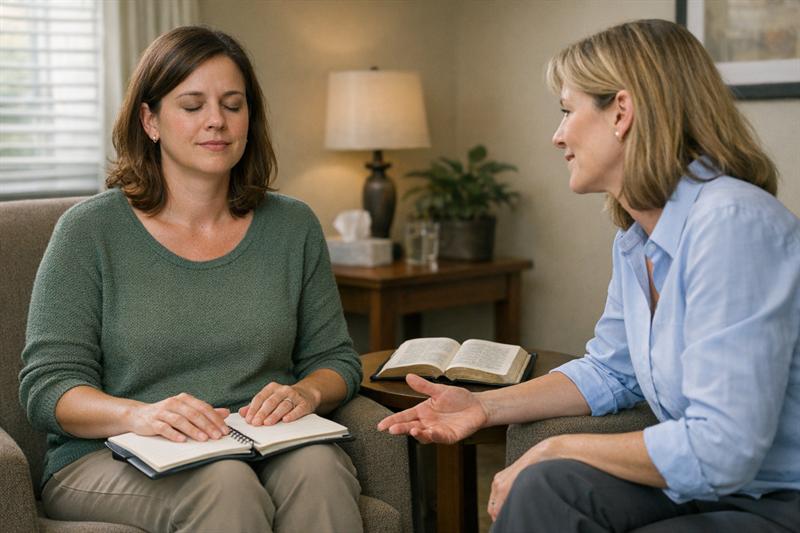
Quick Answer: Christian counseling for anxiety can help by addressing both the thought patterns that fuel anxiety and the deeper fears or beliefs behind them, so overwhelming reactions can be replaced with steadier, more practical responses.
Why Anxiety Can Feel Overwhelming—Even with Strong Faith
One of the most frustrating parts of anxiety is that it does not automatically go away because someone has strong faith. Many people pray, stay grounded in their beliefs, and still feel stuck in cycles of worry.
Anxiety is not only spiritual. It can involve learned thought patterns, emotional reactions, and physical responses that reinforce each other. When those patterns are not addressed directly, anxiety often stays in place and may begin to affect more areas of life.
A common struggle is trying to push anxiety away through faith alone without understanding what is driving it. That can lead to frustration and, at times, guilt. Instead of relief, the pressure increases.
An integrated approach changes this. Faith remains important, but it is paired with practical tools that help interrupt the cycle.
What Is Christian Counseling?
Christian counseling is a form of therapy that combines established therapeutic approaches with biblical principles. It focuses on emotional and mental health while also addressing how beliefs and values influence those experiences.
It is often a good fit for individuals and couples who want support that stays aligned with their faith, especially when dealing with ongoing anxiety or stress.
How Christian Counseling Differs from Traditional Therapy
Traditional therapy often focuses on thoughts, behaviors, and emotional patterns. Christian counseling uses those same foundations while also including faith as part of the process.
This means conversations may include topics like identity, fear, trust, forgiveness, and meaning. The goal is not to replace effective therapeutic methods, but to apply them in a way that aligns with what the person believes.
For a deeper comparison, see Christian counseling vs secular therapy.
The Role of Faith in Emotional Healing
Faith is not used as a shortcut. It becomes part of how situations are understood and worked through.
This matters because anxiety is often tied to deeper concerns like fear of the unknown, loss of control, or uncertainty about outcomes. When those concerns are addressed at both a mental and spiritual level, people often gain more clarity on how to respond instead of just reacting.
How Christian Counseling Helps with Anxiety
Christian counseling focuses on identifying what is fueling anxiety and then working through those patterns step by step. This is often where meaningful change begins.
Identifying Thought Patterns and Triggers
Anxiety is often maintained by repeated thought loops. Overthinking, worst-case thinking, and constantly scanning for problems are some of the most common patterns.
When these thoughts go unchallenged, they can start to feel accurate, even when they are not grounded in the situation. That is what keeps the cycle going.
Counseling helps slow that process down. Once the patterns are clear, they can be questioned instead of automatically followed.
Combining Biblical Truth with Proven Techniques
Many Christian counselors use structured approaches similar to cognitive behavioral therapy. These approaches focus on identifying distorted thinking and replacing it with more balanced, realistic perspectives.
The difference is how those new perspectives are reinforced. They are not only logical, but also connected to belief and meaning. For many people, that makes them easier to apply consistently.
When both sides are addressed—mental and spiritual—the response to anxiety often becomes more stable and less reactive.
Developing Healthy Coping Strategies
Without practical tools, anxiety often repeats itself. This is where many people stay stuck.
Christian counseling introduces structured ways to respond instead of react, including:
- Interrupting spiraling thoughts before they escalate
- Creating daily structure to reduce mental overload
- Learning how to regulate emotional responses in real time
- Using prayer and reflection in a focused, intentional way
These tools are practiced consistently, not just discussed. Over time, they can become more natural responses instead of something that feels forced.
If you’re looking for one-on-one support, you can explore individual counseling options.
If any of this feels familiar, anxiety may no longer feel manageable on your own:
- Your thoughts do not slow down, even when you try to rest
- You still feel anxious after trying to handle it spiritually
- You are starting to avoid decisions or situations
- Your anxiety is affecting your relationships or daily routine
When these patterns are present, they often continue without a different kind of support. At that point, structured counseling may be a practical next step.
Common Anxiety Struggles Addressed in Christian Counseling
Chronic Worry and Overthinking
This often shows up as constant mental activity. The mind keeps searching for problems, even when nothing immediate is wrong.
Over time, this can lead to mental fatigue. Focus drops, rest becomes harder, and it becomes difficult to feel present.
Fear, Control, and Uncertainty
Another common pattern is trying to control outcomes to reduce anxiety.
This usually has the opposite effect. The more control someone tries to maintain, the more pressure builds, because not everything can be controlled. That tension keeps the anxiety active.
Stress from Life Transitions
Life changes are a common trigger. Career shifts, relationship changes, or unexpected challenges can create instability.
This is often when anxiety increases quickly. Without support, it can settle into a longer-term pattern instead of easing as the situation stabilizes.
When anxiety begins to affect a relationship, Christian couples counseling can help address the strain it creates.
What to Expect in a Christian Counseling Session
The first session is usually focused on understanding what is happening beneath the surface. This includes how you think, how you respond emotionally, and what beliefs may be influencing those reactions.
From there, sessions often become more structured. Patterns are identified, goals are clarified, and specific strategies are introduced.
A common misunderstanding is expecting immediate relief. In reality, progress often comes from applying what is discussed between sessions, not just talking through it once.
For a detailed breakdown, see what to expect in your first Christian counseling session.
When to Consider Christian Counseling for Anxiety
There are several signs that anxiety may be moving beyond temporary stress:
- It interferes with daily decisions or responsibilities
- It continues even after trying to manage it on your own
- It affects sleep, focus, or relationships
- It leads to avoidance or withdrawal
If these are present, anxiety may have become an ongoing pattern rather than occasional stress. In that case, direct support may help.
You can schedule a free consultation to talk through what support could look like.
How to Find the Right Christian Counselor in Oviedo, FL
Finding the right counselor comes down to fit, not just availability.
What tends to matter most:
- Licensed experience working with anxiety-related concerns
- A clear ability to integrate faith and therapy rather than treating them separately
- A communication style that is direct, structured, and easy to follow
- The option to start with a consultation before committing
If you want a clearer framework, see how to choose the right Christian counselor.
Key Takeaways
- Christian counseling addresses both thought patterns and belief systems
- Anxiety often continues when unhealthy thinking patterns are not interrupted
- Faith does not replace the need for practical coping strategies
- Structured support can help break cycles of overthinking and stress
- Addressing anxiety earlier can make it easier to manage
Conclusion
Anxiety becomes difficult to manage when it turns into a repeated pattern. Thoughts loop, stress builds, and avoidance starts to shape decisions. Without direct support, that pattern often continues and begins to affect more areas of life.
Many people recognize the problem but keep relying on approaches that are not creating change.
Christian counseling addresses both sides of the issue at the same time. It works through the thought patterns while also addressing the deeper fears and beliefs connected to them. That combination can create real forward movement.
If you are dealing with ongoing anxiety, a practical next step is to talk it through with someone who understands both sides. ER Counseling Services offers a structured, faith-based approach to help identify what may be driving the anxiety and how to begin changing those patterns. You can schedule a free consultation to begin that process.
FAQ
Is Christian counseling effective for anxiety?
Christian counseling is often helpful for anxiety because it addresses both thought patterns and underlying beliefs. Many people find that combining practical strategies with a faith-based perspective supports more consistent progress. A consultation can help determine whether it fits your situation.
Can you combine faith with therapy for anxiety?
Yes, many counseling approaches intentionally integrate both. This can include practical tools alongside discussions about beliefs and values. Seeing how this works in a session often makes it easier to tell whether it is the right fit.
What does the Bible say about anxiety and stress?
Biblical teaching often emphasizes trust, peace, and bringing concerns forward instead of carrying them alone. In counseling, these ideas can be applied in a structured way to how thoughts and stress responses are handled day to day.
How is Christian counseling different from secular therapy?
Christian counseling includes faith as part of the process while still using established therapeutic methods. This allows emotional patterns and spiritual concerns to be addressed together. The right choice depends on what aligns with your values and goals.
Do I need to be religious to benefit from Christian counseling?
No, but it tends to be most helpful for people who are open to including faith in the process. The approach can be adjusted based on comfort level. A consultation can help clarify whether it feels like a good fit.
How long does counseling for anxiety usually take?
The timeline depends on how established the patterns are and what goals you are working toward. Some people notice progress sooner, while others need more time to work through deeper patterns. Early sessions usually help set clearer expectations.