
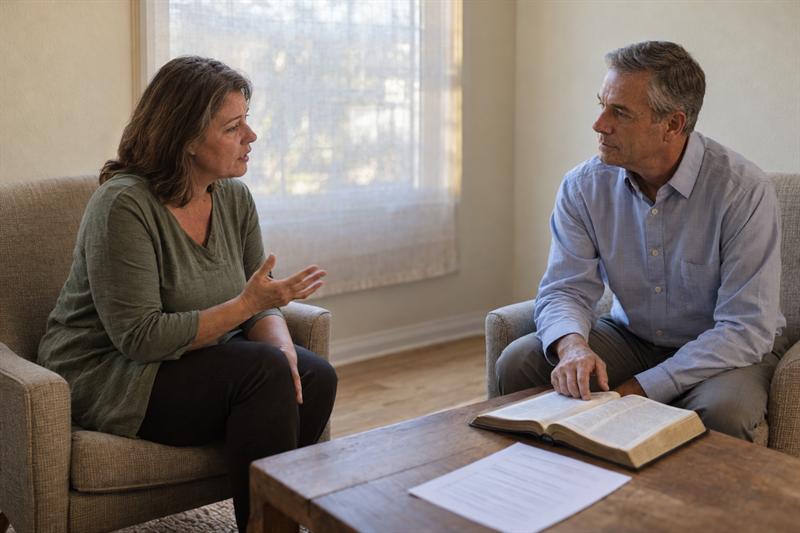
For many people, the search starts with one problem: the pain is real, but the options are confusing. ERCounselingServices.com offers Christian counseling resources that can help people think more clearly about support when grief, faith, and daily life all feel harder to carry at once.
Why choosing grief support can feel so hard
Grief can make even simple decisions feel heavier. When someone is already tired, distracted, or emotionally overwhelmed, comparing counselors, support groups, and church-based care can quickly become another burden.
Many people wait too long because every option sounds close enough. When support is delayed, grief may start affecting sleep, concentration, relationships, and the ability to stay present in daily responsibilities.
When every option sounds similar but may not be
Church support, grief groups, pastoral conversations, and licensed counseling are not the same thing. They can overlap, but they often serve different purposes.
Pastoral care often offers spiritual encouragement and prayer. A support group often offers shared understanding and community. Licensed counseling is often the better fit when grief is significantly disrupting daily life, bringing up trauma, or creating private struggles that need more focused support.
Why grief, faith, and emotional safety all matter in the decision
Some people do not just want a counselor who is comfortable discussing faith. They want support where faith does not need to be translated, defended, or pushed aside.
That need usually becomes clear quickly. If someone feels they have to hide spiritual questions, soften emotional pain, or accept quick religious answers, the support may not feel safe or useful enough to help.
What Christian grief counseling is and what it is not
Christian grief counseling is licensed counseling that makes room for grief and faith in the same conversation. It is not simply general encouragement with Christian language added on top.
The distinction matters because grief is rarely only emotional. It often touches trust, meaning, relationships, guilt, and questions about God. Support that ignores those layers may stay too shallow. Support that rushes to explain them away may feel dismissive.
How faith may be integrated in counseling
Faith integration usually means the counseling process can include spiritual questions, biblical values, prayer if the client wants it, and sensitivity to how loss affects a person’s relationship with God. It should create room for the full experience of grief, not replace grief with spiritual slogans.
- It can include discussion of doubt, anger, or confusion after loss.
- It can include prayer or Scripture when that supports the client’s process.
- It should respect the client’s pace rather than forcing spiritual closure.
- It should not treat grief as a lack of faith.
This point is easy to miss. A Christian label does not automatically mean grief will be handled with emotional depth. Readers who want more clarity on this difference may find how prayer and Scripture are used in Christian counseling helpful.
Christian counseling vs pastoral care vs support groups
Pastoral care often helps with prayer, biblical encouragement, and spiritual support during a hard season. A support group often helps reduce isolation because other people in the room understand loss firsthand.
Licensed counseling is often the more practical option when grief has become tangled with trauma, family conflict, persistent avoidance, or major disruption in daily life. Some people benefit from more than one kind of support, but it still helps to know which kind is meant to do what.
Sometimes a person joins a group for comfort, but the deeper parts of the grief remain largely unaddressed because the issue is no longer only loss. It has become loss plus trauma, loss plus guilt, or loss plus family strain. In those cases, healing from trauma and grief with Christian counseling in Florida offers a clearer picture of that overlap.
Signs you may want more than informal support
Informal support is valuable, but it may stop being enough when grief keeps spilling into areas of life that need more structure and attention. If the pain is staying private, getting heavier, or changing how someone functions day to day, that often points to a need for more support.
Many people tell themselves that prayer, time, or support from loved ones should be enough. When that approach is not helping, grief can become more entrenched instead of more manageable.
When grief is affecting daily life, relationships, or functioning
- Sleep is off for long stretches and emotional exhaustion keeps building.
- Concentration drops and routine responsibilities start slipping.
- Conversations feel harder because the person is checked out, irritable, or emotionally flat.
- Grief no longer feels like a wave. It feels like the background of everything.
If these patterns are showing up, the issue is no longer only sadness. It may be shaping how life is being lived, and that often calls for more than occasional encouragement.
When loss is mixed with trauma, guilt, conflict, or spiritual questions
Some grief feels heavier because of what came with the loss. Sudden death, unresolved conflict, caregiving exhaustion, strained family dynamics, or guilt about what happened often make grief more complex.
This is where people can stay stuck for a long time. They may think they are struggling with grief alone, but what they are carrying is grief plus something else. When grief is also raising spiritual confusion or distance from God, support often needs to hold both the emotional and faith side of the struggle.
If you are seeing these signs, the situation may need more than informal support:
- You feel worse after trying to push grief down or “stay strong.”
- You keep replaying parts of the loss, the conflict, or what you wish had happened differently.
- You want faith-based support, but quick spiritual answers leave you feeling more alone.
- You are functioning on the outside, but internally everything feels narrowed by loss.
When those patterns are present, structured support is often worth considering.
If the question is whether the struggle has crossed that line, Do I need Christian counseling? Signs to help you decide can help make that decision clearer.
Questions to ask before choosing a Christian grief counselor
This is often the section that changes the decision. Most people do not need more provider descriptions. They need better questions.
The goal is not to interview someone perfectly. It is to hear enough to know whether the counselor understands grief, makes room for faith, and offers a process that fits what the loss is actually doing in your life.
Questions about grief experience and approach
- What types of grief or loss do you commonly work with? A specific answer may show relevant experience. A vague answer may leave the fit unclear.
- How do you approach grief when trauma or family conflict is also involved? This helps reveal whether the counselor can handle complexity rather than treating all grief the same way.
- What can someone expect in early sessions? A clear answer can show structure and reduce some of the fear around starting.
- How do you think about goals in grief counseling? Grief support should not sound like rushing someone to “move on.” It should sound like helping them process loss and live more steadily and honestly alongside it.
A counselor does not need to sound dramatic or impressive. A better sign is whether the answer is grounded, specific, and able to describe how grief often unfolds in real life.
Questions about faith integration
- How is Christian faith included in the counseling process? This helps separate meaningful integration from branding language.
- How do you respond when someone is grieving and also struggling spiritually? The answer should make room for pain, doubt, and questions.
- Do you make space for prayer, Scripture, or spiritual concerns if the client wants that? This shows whether faith is welcomed naturally.
- How do you avoid using spiritual language in a way that feels dismissive? This often reveals emotional maturity and pastoral sensitivity.
What commonly goes wrong here is assuming that “faith-based” automatically means the same thing to everyone. The better question is how it works in practice. The difference between supportive faith integration and spiritual bypassing often becomes clearer in the answer.
Questions about session format, logistics, and comfort
- Do you offer individual, couples, or family sessions when loss affects more than one person?
- How often do sessions usually happen at the beginning?
- What is your policy on cancellations, scheduling, and consultation calls?
- What should someone do if they start and it does not feel like the right fit?
These questions matter because grief is not just emotional. It is practical too. If the structure does not fit real life, people may stop going, and support can lose momentum before it has a chance to help.
Questions about online counseling and privacy
- Is online counseling a good fit for grief support?
- How is privacy handled during virtual sessions?
- What if the client needs flexibility because grief is affecting energy and routine?
Online counseling is often a practical choice when grief has made scheduling, travel, or energy harder to manage. It usually works best when the person has a private space, a reliable connection, and enough comfort to talk openly from home. For a fuller explanation, see how online Christian counseling works in Florida.
How to tell if the support is a good fit
Fit is not just about credentials or shared beliefs. It is about whether the support creates enough safety and clarity for real grief work to happen.
Some people stay with poor-fit support because discomfort is mistaken for progress. Some discomfort is part of grief. But when the discomfort comes from feeling rushed, misunderstood, or spiritually managed, the fit may be wrong.
Emotional safety and being heard
A good fit usually feels steady, not performative. The person has room to say what is true without being corrected too quickly, minimized, or pushed toward a cleaner version of grief.
- You feel listened to rather than handled.
- Your pain is not reduced to a lesson or phrase.
- Hard emotions are allowed to stay in the room long enough to be understood.
Respect for your beliefs and pace
Faith should be welcomed without being used as pressure. If the counselor treats grief like a spiritual problem to solve quickly, the process may become less honest.
This is where problems often deepen. People may begin editing themselves to sound more faithful, and real grief can go underground instead of being processed.
Clarity about expectations and next steps
A good fit also includes practical clarity. The person should understand what sessions may focus on, how often support might happen at the start, and what the process is trying to address.
Clear structure matters because grief already creates enough uncertainty. Support should reduce confusion, not add to it.
Red flags or reasons to keep looking
Not every Christian grief support option is the right one. Recognizing a poor fit early can prevent more frustration later.
This matters because poor-fit support does not just feel disappointing. It can teach people to stay quiet about the hardest parts of grief, which may delay the help they actually need.
Oversimplifying grief with spiritual clichés
If the response to pain is immediate explanation instead of patient listening, that is a warning sign. Grief is not helped by being reduced to a lesson, a timeline, or a phrase that shuts down honest emotion.
This often leads to more isolation. The person may stop bringing real grief into the conversation because the space no longer feels safe enough for it.
Lack of clarity around credentials or process
- You cannot tell whether the support is pastoral, peer-based, or licensed counseling.
- The process stays vague even after direct questions.
- The answers sound warm but not concrete.
Warmth matters, but clarity matters too. If someone cannot explain the kind of support they provide, it becomes harder to know whether it fits the actual need.
Pressure, mismatch, or discomfort you cannot ignore
Not every discomfort is a red flag, but persistent mismatch usually is. If someone feels pressured, spiritually managed, or unseen in the parts of grief that matter most, the support may not be the right fit.
That does not mean support is the wrong next step. It often means a different kind of support or a different counselor is needed.
If you are choosing between in-person and online Christian counseling
For many grieving people, the most practical option is the one they can sustain. In-person counseling offers a separate physical space. Online counseling often removes barriers that make starting or staying consistent harder.
The better choice usually depends on what grief is doing to daily life right now. If travel, scheduling, privacy, or emotional energy are already strained, online support may be the more workable option.
When online support may be practical
- Energy is low and leaving home feels harder than usual.
- Work or caregiving responsibilities make travel difficult.
- Privacy is easier to protect with a quiet space at home.
- Consistency matters more than location.
People often do better with support they can realistically keep, not support that looks ideal on paper but becomes one more burden to maintain.
Questions to ask before choosing virtual care
Ask how privacy is handled, what platform is used, how sessions are structured, and what happens if the connection fails or the conversation becomes especially emotional. Those questions help clarify whether virtual care is being handled thoughtfully.
If the answers are clear, online counseling is usually easier to evaluate. If the answers stay vague, that may point to a broader lack of process clarity.
Key Takeaways Before Booking a Consultation
- Grief support options are not interchangeable, and the right choice depends on what the loss is affecting.
- The best questions reveal grief experience, faith integration, structure, and emotional safety.
- Christian support should make room for grief and faith together, not use faith to rush grief along.
- If grief is significantly disrupting daily life, relationships, or spiritual stability, informal support may no longer be enough.
- Poor-fit support may sound comforting at first but leave the hardest parts untouched.
Conclusion: choosing support with clarity, not pressure
The real problem is not just grief. It is trying to choose support while grief is already draining focus, energy, and emotional margin. When that choice is handled poorly, people may end up with support that sounds right but does not meet the level of pain, complexity, or faith-related questions they are actually carrying.
If grief is affecting daily life, raising spiritual confusion, or staying stuck around trauma, guilt, or family strain, waiting may make the process harder. ERCounselingServices.com can be a practical next step for those looking for a thoughtful Christian counseling approach and clearer questions to ask when evaluating support. For readers getting ready to talk with a provider, how to prepare for a Christian counseling consultation is a useful place to start.
Company approach
ERCounselingServices.com approaches Christian counseling with attention to both emotional struggle and faith concerns, which can be especially important when grief has become more than sadness alone. The value is not only in offering a Christian perspective. It is also in helping people sort through what kind of support fits, what questions reveal real alignment, and what signs suggest the issue has become more complex than informal care can address well.
That approach matters because grief rarely stays in one lane. It often affects thoughts, relationships, routines, and spiritual life at the same time. When support can address those layers clearly and without pressure, people are often in a better position to make a sound next decision.
FAQ
What questions should be asked before starting Christian grief counseling?
Start with questions that show how the counselor handles both grief and faith in practice. Ask what kinds of loss they commonly work with, how they approach grief when trauma or family conflict is involved, what early sessions usually look like, and how Christian faith is included if the client wants that. The most useful answers are specific. If the response stays vague, the fit may still be unclear.
What is the difference between Christian grief counseling and a church grief support group?
A church grief support group usually offers shared experience, comfort, and connection with others who understand loss. Christian grief counseling is more individualized and structured, especially when grief is affecting daily functioning, relationships, or spiritual stability. The difference matters when loss has become more complex than community support alone can carry.
How do I know if I need grief counseling or just support from family, friends, or church?
If support from loved ones is helping you stay connected, honest, and generally functional, informal support may be enough for now. If grief is disrupting sleep, concentration, responsibilities, or your ability to be present in relationships, that often means more support is needed. Another key sign is complexity. When grief is tangled with guilt, trauma, conflict, or spiritual struggle, informal support often stops being enough even if it is sincere and caring.
Can online Christian grief counseling be a good option after a loss?
Yes, especially when grief has made energy, travel, or scheduling harder to manage. Online support is often the better practical option for someone who needs consistency but does not have much margin. The important issue is not whether virtual counseling counts as real support. It is whether the format gives enough privacy, stability, and comfort for honest conversation.
How can I tell if a Christian grief counselor is the right fit for me?
A good fit usually feels clear and steady. You feel heard instead of managed, your faith is respected without pressure, and the process is explained in a way that makes sense. One of the strongest signs is that the counselor can make room for grief, doubt, and spiritual questions without trying to clean them up too quickly.
Is it okay to ask a Christian counselor how they include faith in grief sessions?
Yes. That question is one of the fastest ways to tell what “Christian” actually means in the counseling process. Some counselors simply share a faith background. Others intentionally make room for prayer, Scripture, spiritual questions, and biblical themes when the client wants that. The key distinction is whether faith is integrated in a way that supports honest grief rather than covering it over.