
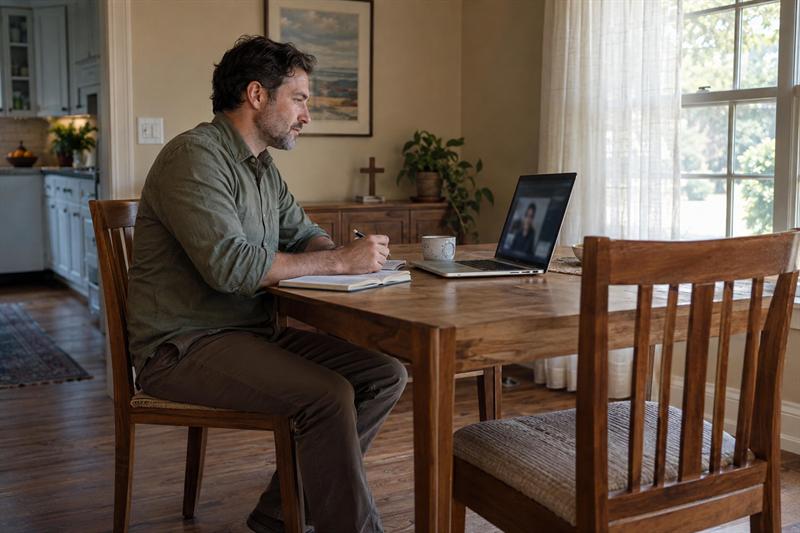
When one spouse is ready for help and the other says no, a common mistake is assuming nothing useful can happen until both people agree. That can leave the willing spouse stuck in confusion, repeated arguments, and growing resentment. For many couples, this becomes a turning point because the marriage is already carrying more strain than either person knows how to address well.
When your spouse says no to counseling, you are not out of options
A spouse refusing counseling can feel like a dead end, but it usually is not. The refusal matters, but it does not determine the future of the marriage or remove the need for support.
This is where the situation often gets worse. One spouse keeps trying to restart the same conversation, the other keeps pulling away, and the marriage becomes more defined by pressure and resistance than by understanding. If that pattern continues, emotional distance usually deepens.
This article focuses on what comes after refusal, hesitation, or repeated delay. If the main issue is still how to bring up counseling without creating more conflict, this earlier guide on how to ask your spouse to go to couples counseling without creating more distance covers that part of the process.
Can Christian counseling still help if only one spouse is willing?
Yes. Christian counseling can still help when only one spouse is willing because the marriage strain does not disappear just because one person refuses support. What changes is the kind of work that happens first.
Individual Christian counseling often helps with:
- understanding the relationship dynamic more clearly
- recognizing recurring communication patterns
- setting healthier boundaries
- responding with less reactivity
- discerning what needs to happen next
It does not force the other spouse to participate. It does not guarantee change in the other person. It does not solve a two-person marriage problem by itself. What it can do is help the willing spouse respond more steadily and think more clearly about what happens next.
Many people start counseling focused on one question: “How do I get my spouse to go?” After a few sessions, the issue may look different. The deeper problem is often not just refusal. It is a cycle of blame, shutdown, fear, avoidance, or unresolved hurt that keeps repeating. That shift matters because it moves the goal from persuasion to clarity.
If you are still sorting out whether starting alone makes sense, these signs that it may be time for Christian counseling can help clarify that decision.
Why a spouse may refuse counseling
Fear of blame, exposure, or being judged
Some spouses hear the word counseling and assume they are about to be criticized. They may expect a session to become a more formal version of the same argument happening at home. When that fear is driving the refusal, the “no” is less about counseling itself and more about what they think counseling will expose.
This is a common pattern in struggling marriages. One person sees counseling as help. The other sees it as a setup. If that misunderstanding is never addressed, the spouse who is willing may become more urgent while the other becomes more defensive. That usually results in even less openness.
Uncertainty about what counseling involves
Some refusals come from not knowing what actually happens in counseling. A spouse may picture being cornered, pressured to share too much, or pushed into admissions before trust has been built.
That misunderstanding can grow when counseling stays vague. Clear expectations tend to reduce fear. For couples who are uncertain about the process itself, what happens in Christian couples counseling can make the first sessions easier to understand.
Emotional shutdown, avoidance, or fatigue
Not every refusal is aggressive. Some spouses are emotionally tired, discouraged, or so used to conflict that they no longer know how to engage well. In those situations, “I don’t want to go” can really mean “I don’t think this will help” or “I do not have the energy for one more hard conversation.”
This can get worse when the marriage has already been strained for a long time. What began as avoidance can turn into emotional numbness. Once that happens, the problem is no longer just reluctance. It can become a deeper disconnection that affects trust, communication, and closeness.
Practical barriers such as time, privacy, or logistics
Some refusals are shaped by practical obstacles. That does not mean the marriage is fine. It means the barrier may be more about access than resistance.
- work schedules that leave little overlap
- child care responsibilities
- transportation or travel time
- privacy concerns about being seen in an office
People sometimes misread this situation. They may assume a spouse is refusing help when the real issue is that the process feels too hard to fit into everyday life. In those cases, online support can remove a major obstacle. How online Christian counseling works in Florida explains how that option can reduce scheduling and access barriers.
What to do next if your spouse will not attend
Start with your own counseling support
If your spouse will not attend, the most practical next step is often to begin with your own support. Waiting for the other person to become ready can keep the same pattern in place and raise the emotional cost over time.
This is not a betrayal of the marriage. It is a direct response to the fact that the relationship is already under strain and one person is ready to work on it. In some cases, once the willing spouse becomes clearer, calmer, and less reactive, later conversations about the marriage also become more productive.
If you are seeing these signs, it may be time to take action:
- the same argument keeps repeating and nothing changes after it ends
- your spouse says no to counseling but offers no alternative path forward
- you feel increasingly anxious, resentful, or emotionally exhausted
- the relationship feels stuck between conflict and silence
When those signs are present, waiting often deepens the pattern. Beginning support is often the clearest next step.
If you are ready to move forward but unsure how to begin, this guide to preparing for a Christian counseling consultation can help you know what to expect.
Focus on clarity, patterns, and boundaries
One of the most useful parts of individual counseling is that it helps identify what is actually happening, not just what is being argued about. Many couples stay locked on the surface issue while missing the pattern underneath it.
- what starts the conflict cycle
- how each person responds under stress
- what keeps the issue unresolved
- what belongs to your responsibility and what does not
This is where progress becomes practical. If you are seeing the same painful exchange over and over, the pattern often matters more than the topic. Healthy boundaries can also become clearer here, especially when the marriage has been shaped by pressure, withdrawal, or chronic confusion.
Invite, do not pressure
Repeated pressure often hardens resistance. A spouse who already feels blamed or cornered tends to hear urgency as accusation, even when that is not the intent.
A calmer invitation is often more useful because it lowers defensiveness and keeps the focus on the relationship instead of the argument about counseling. That might sound like, “We keep ending up in the same painful place, and I want help understanding how to change that,” instead of “You need counseling because this is your fault.” The difference is meaningful. One approach may open a door. The other often closes it.
This is where people often go wrong. They think more intensity will finally create movement. In reality, pressure often turns counseling into one more battleground.
Revisit the conversation at the right time
Timing matters. Conversations about counseling usually go poorly in the middle of a fight, right after a breach of trust, or when one person is already shut down.
If the goal is honest consideration, the conversation needs enough calm for both people to think instead of defend. This does not mean waiting forever. It means choosing a moment that supports clarity rather than escalation. When timing is ignored, even a reasonable invitation may get swallowed by the emotional tone around it.
When individual Christian counseling may be especially helpful
- Ongoing communication breakdown: If every serious conversation turns into misunderstanding, defensiveness, or withdrawal, the marriage is no longer resolving conflict well on its own. That often means outside support is needed to interrupt the cycle.
- Emotional distance or resentment: When closeness has been replaced by caution, numbness, or simmering frustration, the problem is already affecting the connection itself. This is where distance can become the new normal unless someone addresses it directly.
- Anxiety, grief, burnout, or depression affecting the relationship: Marriage strain rarely stays isolated from personal distress. When emotional burdens are spilling into the relationship, one-person counseling can help bring steadiness to both the individual and the interaction pattern.
- Confusion about whether to keep waiting or take another step: If you feel stuck between hope and exhaustion, that often means clarity is missing. Counseling can help sort out what is realistic, what is avoidant, and what may need to change.
- Repeated refusals with no meaningful conversation: A single no is one thing. A long pattern of refusal without any honest discussion usually points to a larger problem in the relationship dynamic.
When the situation calls for added caution
Signs the issue may be more than simple reluctance
Sometimes the refusal is part of a more serious pattern. If counseling is mentioned and the response is intimidation, control, manipulation, or retaliation, the issue is no longer just discomfort with therapy.
- intimidation after serious conversations
- control over what can be discussed or questioned
- retaliation for bringing up support or boundaries
- chronic dismissal of your concerns as unimportant or irrational
At that point, the concern is no longer just reluctance. It may involve unhealthy power dynamics in the relationship. When that pattern is ignored, the willing spouse can become more confused and less confident in their own judgment. That is one reason one-person counseling can become especially important.
Why couples counseling is not the same response in every situation
Not every marriage problem should be approached the same way. If one spouse is hesitant but still respectful and engaged, couples counseling may still be a realistic goal later. If the refusal is tied to control, intimidation, or punishment, a different response is often needed first.
This distinction matters because people sometimes assume every relationship issue should move straight into joint counseling. That often goes poorly when the underlying dynamic is not mutual strain but one-sided pressure or emotional unsafety. In those cases, individual support can help clarify what kind of help best fits the situation.
What Christian counseling may look like in this situation
A faith-based approach that is also practical
Christian counseling in this situation should do more than add spiritual language to relationship stress. It should hold together biblical wisdom, honest emotional insight, and practical tools for communication, boundaries, and discernment.
This matters because spiritual language is sometimes misused in struggling marriages. A person may feel pressure to keep waiting, keep absorbing hurt, or keep hoping without gaining clarity about what is actually happening. A faith-based approach is often most helpful when it supports truth, responsibility, and wise action rather than avoidance.
How online Christian counseling can reduce barriers
Online counseling is often a practical starting point when in-person scheduling keeps becoming the reason nothing happens. For some people, removing travel, reducing time away from work, and increasing privacy makes it easier to begin support consistently.
Even when the spouse still does not join, the willing partner can stop losing momentum. That matters because unresolved marriage distress rarely stays contained. It can affect communication, stress levels, daily functioning, and the overall sense of stability at home.
Key takeaways
- A spouse refusing counseling does not mean there is nothing you can do.
- Individual Christian counseling can still help with clarity, communication patterns, emotional steadiness, and next-step discernment.
- The reason behind the refusal matters. Fear, misunderstanding, exhaustion, logistics, and controlling dynamics do not call for the same response.
- Waiting without support often strengthens the same unhealthy pattern that brought you here.
Conclusion: You can still take a wise next step
When a spouse refuses Christian counseling, the real problem is not just the refusal itself. It is often the pattern underneath it, which may involve avoidance, fear, emotional distance, or repeated conflict with no path forward. If that pattern is not addressed well, it often deepens. Conversations may become more reactive, hope may become more fragile, and the marriage may start running on confusion instead of clarity.
That is why reaching out to ERCounselingServices can be a practical next step. When one spouse is ready and the other is not, individual Christian counseling can help clarify the pattern, steady the response, and identify wise next steps. If you are already seeing repeated refusal, emotional exhaustion, or growing distance, this may be the point where support is more helpful than continued waiting.
FAQ
Can Christian counseling help if my spouse refuses to come?
Yes. Christian counseling can still help because it addresses the part of the situation that is already within reach. That usually includes understanding the conflict pattern, improving how you respond under stress, and identifying what keeps the marriage stuck.
A common misunderstanding is that counseling only matters if both people show up. In reality, one-person work often clarifies whether the main issue is fear, avoidance, emotional exhaustion, or a more serious relational pattern. That can change the next decision in a way that repeated arguments at home usually do not.
Should I start Christian counseling alone for marriage problems?
In many cases, yes. If the marriage is struggling and your spouse keeps refusing, delaying, or avoiding the conversation, starting alone is often more productive than waiting indefinitely.
The key distinction is purpose. You are not trying to do couples work by yourself. You are trying to gain clarity, steadiness, and better judgment about how to respond. That often leads to stronger boundaries, less reactive conversations, and a clearer sense of what the relationship actually needs.
What if my spouse says counseling means the marriage is already failing?
That response often reflects fear, shame, or misunderstanding more than reality. Many people assume counseling is only for relationships that are beyond repair, when in practice it is often sought because a couple keeps repeating painful patterns they have not been able to resolve alone.
This matters because the spouse may not be refusing help itself. They may be refusing what counseling seems to represent to them. If the refusal is rooted in that fear, the next conversation usually needs to lower defensiveness rather than intensify it.
How do I bring up Christian counseling again without causing more distance?
The most effective approach is usually calm, clear, and low-pressure. Bringing it up in the middle of conflict or as a demand often increases resistance.
A useful distinction is whether you are inviting discussion or trying to force agreement. Saying, “We keep ending up in the same painful place and I want help changing that,” usually lands differently than, “You need counseling because you are the problem.” Tone and timing shape whether the conversation leads to openness or shutdown.
Is online Christian counseling a good option if scheduling is the main problem?
Yes. When logistics are the main obstacle, online counseling is often the most practical option. It removes travel time, reduces coordination strain, and can make privacy easier.
The important question is whether the resistance changes when access becomes easier. If it does, the main issue may be scheduling. If it does not, the problem may run deeper than logistics alone.
When is a spouse’s refusal a sign that I need a different kind of support?
It may point to a different kind of support when refusal is tied to intimidation, manipulation, retaliation, or chronic dismissal of your concerns. At that point, the issue is not just reluctance about counseling. It is part of a broader pattern in the relationship.
This distinction matters because hesitation and control are not the same thing. A spouse who is unsure but still willing to talk is very different from a spouse who punishes any attempt to address the problem. That pattern usually changes what kind of support is needed first.