
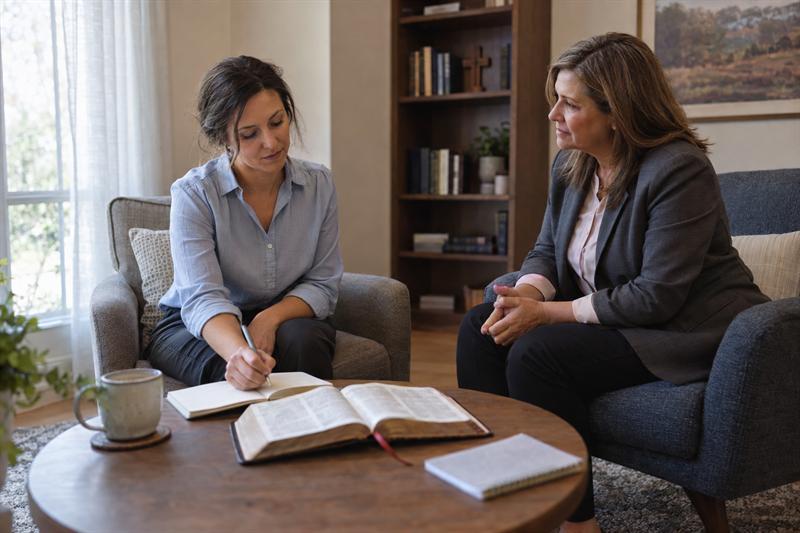
Quick Answer: Individual Christian counseling in Orlando can be helpful when stress, anxiety, grief, or repeated relationship patterns are no longer improving with time, prayer, or personal effort alone. The issue is often not one hard week or one difficult conversation. It is a pattern that keeps affecting emotions, decisions, faith, and daily peace, which is why structured one-on-one support may be worth considering.
For people searching ercounselingservices.com, the question is usually not whether life feels hard. It is whether the struggle has reached a point where personal effort, prayer, and time are no longer enough by themselves. Individual Christian counseling gives that struggle a place to be understood more clearly and addressed more directly.
What Individual Christian Counseling Means
Individual Christian counseling is one-on-one counseling that addresses emotional, relational, and spiritual concerns within the same process. It is meant for people who want support that takes both emotional health and Christian faith seriously.
Many people are not only dealing with stress or anxiety. They are also trying to make sense of guilt, fear, discouragement, difficult choices, or recurring patterns that affect how they live and relate to others. One common response is trying to solve all of that through self-discipline alone. That can lead to more frustration because the deeper issue may remain unchanged.
Christian counseling may include:
- practical work around stress, coping, and emotional patterns
- discussion of values, beliefs, and spiritual questions
- prayer or scripture when it fits the client’s goals and comfort level
Faith integration is not just adding Christian language to a standard therapy conversation. It means the counseling process makes room for how beliefs shape identity, decisions, hope, shame, forgiveness, and healing. For a fuller comparison, Christian counseling vs secular therapy offers helpful background.
How It Differs From General Therapy or Pastoral Support
General therapy may be very helpful, but faith is not always part of the framework. Pastoral support can also be meaningful, especially for encouragement and spiritual care, but it is not the same as structured counseling with clear goals and a focused process.
This is where confusion often starts. Someone feels overwhelmed, talks to trusted people, reads helpful material, prays faithfully, and still finds the same reactions returning. If the same fear, shutdown, guilt, or conflict pattern keeps repeating, the issue may need more than encouragement. It may need deeper work.
Christian counseling fits in that space. It supports emotional health while also making room for the person’s faith, values, and spiritual concerns.
When One-on-One Christian Counseling May Be Helpful
Individual counseling is not only for crisis. It can be the right step when something feels consistently off, keeps repeating, or starts affecting how a person thinks, responds, and relates to others.
Many people wait too long because they assume counseling is only for severe situations. In practice, stress often builds gradually, coping gets weaker, and the same issue starts affecting more areas of life.
Stress, Anxiety, and Emotional Overwhelm
Stress usually stops being “just stress” when it begins shaping daily life. It may show up in overthinking, irritability, trouble sleeping, difficulty focusing, tension in relationships, and a steady sense of being internally on edge.
Anxiety can also affect decision-making. It can make small choices feel heavy, turn uncertainty into pressure, and leave people second-guessing themselves long after the moment has passed. This often gets worse when someone keeps pushing through without understanding what is driving the reaction.
One-on-one counseling can help identify triggers, thought patterns, emotional habits, and responses that keep the cycle going. That is one reason many readers also benefit from how Christian counseling helps with anxiety and stress, especially when the pressure is already affecting work, home, or spiritual life.
Life Transitions, Grief, and Uncertainty
Life transitions disrupt more than schedules. They often expose deeper fears, unresolved grief, identity questions, and tension between what a person expected life to be and what it has become.
This includes career changes, marriage shifts, parenting seasons, loss, relocation, and periods of spiritual uncertainty. A common pattern is assuming the discomfort will settle once the transition passes. But when the emotional weight underneath the transition is not addressed, the distress can linger and start shaping future decisions too.
Christian counseling creates space to sort through that weight with both emotional honesty and spiritual clarity. For related support, faith-based coping strategies for life transitions and stress expands on what healthy coping can look like during change.
Relationship Patterns and Boundaries
Some of the most important reasons people seek individual counseling are relational, even when they are not starting with couples counseling. This includes conflict avoidance, people-pleasing, repeated unhealthy dynamics, difficulty saying no, emotional shutdown, and feeling responsible for everyone else’s peace.
Sometimes the person thinks the problem is one difficult relationship, but the same dynamic shows up with a spouse, parent, friend, or coworker. If that is happening, the issue may not be only the other person. It may reflect a deeper pattern in how stress, fear, guilt, or self-protection are operating.
- Repeatedly saying yes when you mean no
- Shutting down instead of addressing conflict directly
- Feeling guilty whenever you try to set a boundary
- Seeing the same relational tension play out in different settings
When those signs are present, it may be time to address the pattern more intentionally. Over time, unaddressed patterns can make relationships more strained and decisions more reactive.
If you keep seeing the same emotional or relationship pattern, it may be more than a temporary issue.
- You feel responsible for other people’s reactions
- You replay conversations long after they end
- You avoid necessary decisions because conflict feels too costly
- You are functioning outwardly, but inwardly feel tense, stuck, or depleted
When those indicators remain consistent, individual counseling may be a helpful next step.
Personal Growth, Identity, and Values Conflict
Some people come to counseling not because life is visibly falling apart, but because life no longer feels aligned. They are functioning, meeting responsibilities, and keeping up appearances, yet they feel internally divided.
This often shows up as guilt, indecision, low self-worth, loss of direction, or a growing gap between what they believe and how they are living. When values conflict goes unaddressed, it can lead to chronic frustration, avoidant choices, and a deeper sense of disconnection from one’s own life.
Individual Christian counseling can be especially helpful here because it can address emotional patterns and faith-based meaning together. Readers exploring this area may also find the role of faith in emotional healing and personal growth useful for understanding how those pieces connect.
Why Some People Start With Individual Counseling
Many people assume relational distress automatically means couples or family counseling should come first. Sometimes that is true, but not always. If personal anxiety, fear, self-blame, shutdown, or poor boundaries are fueling the problem, individual counseling is often a practical starting point.
This matters because repeated internal reactions shape how conversations unfold. When that pattern is left unaddressed, the relationship problem does not always improve simply because both people are in the room together. The underlying issue may still need attention.
That does not mean couples or family counseling is unnecessary. It means individual work may be the first step that makes later relational work more productive.
Clarifying Personal Patterns Before Addressing Shared Dynamics
Insight changes how people show up in relationships. When someone understands their own fear, avoidance, emotional reactivity, or self-protective habits, they often communicate more clearly and respond less impulsively.
A common pattern is trying to fix shared conflict without understanding personal triggers. That can result in repeated arguments, shallow resolutions, or growing emotional distance. If the same cycle keeps happening, individual counseling often helps clarify what is actually driving it.
For readers who are weighing whether a relationship concern should begin individually or jointly, Christian counseling when your spouse won’t attend can help frame what to do next when only one person is ready.
What to Expect in an Individual Christian Counseling Session
Early counseling sessions usually focus on understanding the main concern, how long it has been building, what patterns are showing up, and what kind of change the person wants to work toward. This gives the process direction instead of turning it into open-ended venting.
A lot of hesitation comes from not knowing what the first session will feel like. That uncertainty can keep people stuck longer than necessary. In many cases, the first sessions are about clarity, not pressure. They help identify what is happening, how it developed, and where focused support is needed.
In Christian counseling, practical tools and faith-sensitive reflection can work together. That might include talking through coping patterns, boundaries, anxiety responses, grief, or decision-making, while also making room for values, beliefs, and spiritual concerns that are part of the struggle.
Early Sessions: Concerns, History, and Goals
The first few sessions often center on the person’s current concerns, relevant history, recent stressors, and the goals that will shape the work ahead. Goals matter because they keep counseling focused on what needs to change instead of circling the same pain without movement.
This can bring helpful clarity early on. Someone who feels overwhelmed by everything often discovers that a few core patterns are affecting much of the problem. For more on this process, setting goals in Christian counseling for personal growth gives a clearer picture of how direction develops in counseling.
How Practical Tools and Faith Reflection May Work Together
Practical tools in counseling often include identifying recurring patterns, improving emotional awareness, strengthening boundaries, and responding differently to stress. These tools matter because insight alone does not change a pattern. A person also needs new ways to think, respond, and make decisions.
Faith reflection may include discussion of beliefs, prayer if desired, and biblical themes that connect to fear, shame, hope, identity, forgiveness, or endurance. What often gets missed is the assumption that faith-based counseling is either purely clinical or purely spiritual. In many cases, a stronger approach is more integrated and makes room for both truth and process.
How to Know if a Christian Counselor Is the Right Fit
Not every Christian counselor approaches care in the same way. A label alone does not tell someone how faith is integrated, what concerns are commonly addressed, or whether the counseling style fits that person’s needs.
The right fit usually becomes clearer when a person looks at both substance and approach. That includes whether the counselor works with the issues that are present, whether explicit faith integration matters to the client, and whether in-person or online support is the better practical fit. Readers looking at virtual care can learn more through how online Christian counseling works in Florida.
Questions to Ask Before Scheduling
Useful fit questions are specific. They should help a person understand how the counseling process actually works, not just whether the practice uses Christian language.
- How is faith included in the counseling process?
- Do you work with stress, anxiety, grief, or recurring relationship patterns?
- What does the first session usually focus on?
- Are online sessions available if scheduling or distance is a concern?
If a person cannot get clear answers to those questions, the fit may still be unclear. Good fit is not about perfection. It is about alignment in approach, focus, and expectations.
Key Takeaways
- Individual Christian counseling is often the right step when stress, anxiety, grief, or relationship patterns keep repeating.
- The issue is usually bigger than one difficult moment. It is a pattern affecting emotions, decisions, faith, and relationships.
- Some relational problems are better addressed through individual counseling first because the core issue may be rooted in fear, boundaries, self-blame, or emotional reactivity.
- Christian counseling is often most helpful when it combines practical emotional work with thoughtful faith integration.
- Waiting too long can give an unhealthy pattern more influence, not less.
Conclusion: Taking the Next Step with Clarity
The deeper problem is not just feeling stressed, stuck, or emotionally tired. It is when the same internal and relational patterns keep shaping daily life and little truly changes. Left unaddressed, those patterns can deepen. Stress can become more chronic, decisions more reactive, relationships more strained, and spiritual discouragement may follow.
That is why taking action can be practical. When anxiety, grief, values conflict, or repeated relationship dynamics keep surfacing, one-on-one support gives the problem structure, language, and direction. ercounselingservices.com may be a helpful next step for people looking for individual Christian counseling in Orlando because this kind of work often requires more than broad encouragement. It benefits from a setting where emotional patterns, personal history, and faith can be addressed together in a focused way.
If the patterns in this article sound familiar, the next clear step is to review what to expect in your first Christian counseling session and move forward with a clearer understanding of what support can look like.
FAQ
What is the difference between Christian counseling and regular therapy?
Christian counseling and regular therapy can use many of the same counseling methods, but they differ in whether faith is intentionally included in the process. In regular therapy, spiritual beliefs may come up or may stay outside the work. In Christian counseling, faith is treated as relevant when it shapes how a person understands fear, guilt, identity, grief, or decision-making.
The important distinction is that Christian counseling is not simply therapy with religious language added. It gives more direct space for the connection between emotional health and Christian belief. For example, someone struggling with anxiety may not only want coping tools. They may also want help understanding how fear, shame, trust, and spiritual discouragement are interacting. That difference changes the kind of support that may feel most aligned.
Can individual Christian counseling help with anxiety and stress?
Yes. Individual Christian counseling can help with anxiety and stress by identifying what is driving the pressure, how it is affecting daily life, and what responses may be keeping the cycle active. Stress usually becomes more serious when it starts shaping sleep, concentration, patience, confidence, and relationships.
This is where people can get stuck. They try to push through, stay productive, and manage the symptoms while the deeper pattern keeps building underneath. A person dealing with chronic overthinking, irritability, or emotional exhaustion often needs more than temporary coping. They may need help understanding what is feeding the tension and how to respond differently.
How do I know if I need individual counseling or couples counseling?
Individual counseling is often the better starting point when the main issue includes personal anxiety, avoidance, poor boundaries, emotional reactivity, or chronic self-blame. Couples counseling is usually more appropriate when both people need help working through communication, conflict, or shared decisions together.
A useful test is whether the same problem shows up across different relationships or settings. If someone avoids conflict with a spouse, a parent, and coworkers, that often points to an individual pattern, not just one relationship issue. In that case, individual counseling can create the clarity needed before or alongside joint work.
What happens in the first Christian counseling session?
The first Christian counseling session usually focuses on what brought the person in, what has been most difficult recently, and what kind of change they want help working toward. Early sessions often cover current stressors, relevant history, recurring patterns, and initial goals.
People often expect they need to explain everything perfectly right away. That is usually not how it works. A person might come in feeling generally overwhelmed, then discover in the first session that more specific issues include conflict avoidance, constant overthinking, and grief that has not been fully processed. The first session is usually about creating clarity and direction, not delivering a perfect summary.
Do Christian counselors include prayer or scripture in therapy?
They often do, but not in a fixed or automatic way. Prayer or scripture may be part of counseling when it fits the person’s goals, comfort level, and the focus of the work. The key issue is whether faith integration supports the counseling process rather than replacing it.
For one person, that may mean direct discussion of biblical themes connected to guilt, forgiveness, or hope. For another, it may mean working with a counselor who understands that Christian beliefs shape major life decisions and emotional struggles. What often gets misunderstood is the idea that all Christian counseling looks the same. It does not. The meaningful difference is how naturally and thoughtfully faith is integrated into the actual work of change.
Is online Christian counseling available if I live near Orlando or Oviedo?
Online Christian counseling is often a practical option for people near Orlando or Oviedo when virtual sessions are offered. It can be especially useful when scheduling, commute time, childcare, or life demands make consistency harder in person.
The main issue is not whether online support looks exactly like in-person counseling in every detail. The bigger question is whether it removes barriers that would otherwise keep someone from getting steady help. When stress is ongoing or life is already overloaded, convenience is not a small factor. It is often what makes consistent support more realistic.